


Tag Archives: forex market
Forex market participation offers numerous advantages for traders and investors seeking opportunities in global financial markets. As the largest and most liquid market in the world, it provides a range of benefits that attract both beginners and experienced traders. Understanding these benefits helps individuals leverage the market effectively and develop strategies to maximize potential returns.
One of the primary benefits is liquidity. The forex market handles daily trading volumes exceeding trillions of dollars, ensuring that traders can enter and exit positions quickly without significant price disruptions. High liquidity allows for tighter spreads, reducing trading costs and providing more favorable conditions for both short-term and long-term strategies.
Accessibility is another key advantage. The forex market operates 24 hours a day, five days a week, across multiple time zones. This continuous operation allows traders to participate at virtually any time, adapting to their schedules and responding promptly to global economic events. Online trading platforms further enhance accessibility by providing real-time data, trading tools, and mobile access, enabling traders to act efficiently regardless of location.
Diversification opportunities make the forex market particularly attractive. Traders can access a wide range of currency pairs, including major, minor, and exotic pairs, offering exposure to different economies and geopolitical environments. This flexibility allows for portfolio diversification, which can reduce overall risk and increase the potential for consistent returns.
Leverage is another significant benefit of participating in the forex market. Traders can control larger positions with a relatively small amount of capital, amplifying potential profits. While leverage increases risk, effective risk management strategies, including stop-loss orders and position sizing, help mitigate potential losses and optimize returns.
Moreover, the forex market provides opportunities for both rising and falling markets. Unlike traditional investments that primarily benefit from price appreciation, forex trading allows traders to profit by buying or selling currencies based on market trends. This flexibility broadens the range of strategies and enhances potential profit avenues.
Finally, participation in the forex market fosters learning and skill development. Traders gain insights into global economics, currency correlations, technical analysis, and risk management. Continuous learning and strategy refinement contribute to long-term trading success and personal growth in financial expertise.
In conclusion, the benefits of participating in the forex market include high liquidity, accessibility, diversification opportunities, leverage, flexible trading in rising and falling markets, and skill development. By understanding and utilizing these advantages, traders can navigate the forex market effectively and work toward achieving consistent and sustainable success.
Geopolitical events shape currency markets more dramatically than most traders realize. Political tensions, trade disputes, and international conflicts can trigger currency movements exceeding 200 pips within hours, making geopolitical analysis essential for forex market success.
Major Geopolitical Events and Currency Impact
Elections create immediate market volatility. The 2016 US presidential election moved USD/MXN by over 800 pips overnight, while Brexit referendum results triggered GBP/USD to fall 1,200 pips in a single session. These events demonstrate how political uncertainty translates directly into currency weakness.
Trade wars significantly affect currency pairs. During peak US-China trade tensions, USD/CNH experienced daily volatility exceeding 300 pips. Similarly, NAFTA renegotiation talks kept USD/CAD in extended ranges, with political headlines driving 150-pip intraday movements.
Military conflicts and sanctions create sustained currency trends. Russian sanctions pushed USD/RUB from 35 to over 80 during peak crisis periods. Middle Eastern tensions consistently strengthen safe-haven currencies like JPY and CHF while weakening regional currencies.
Regional Political Stability Effects
European Union dynamics heavily influence EUR pairs. Italian political crises regularly weaken EUR/USD by 100-150 pips, while French election uncertainties create similar movements. German political stability typically supports euro strength across all major pairs.
Asian political developments impact regional currencies predictably. Hong Kong protests weakened HKD, while Taiwan tensions strengthen JPY as investors seek regional safe havens. North Korean missile tests consistently trigger 50-pip USD/KRW movements within minutes.
Latin American political instability affects commodity currencies. Brazilian political scandals weaken BRL against USD, while Argentine political uncertainty creates sustained USD/ARS appreciation. Venezuelan political crisis eliminated VES from major trading platforms entirely.
Safe Haven Currency Flows
Geopolitical uncertainty drives predictable safe-haven flows. Swiss franc strength accelerates during European political crises, with EUR/CHF often falling 200+ pips during peak uncertainty. Japanese yen benefits from global tensions, with USD/JPY declining sharply during crisis periods.
Gold prices correlate strongly with geopolitical risk, affecting USD strength. Major conflicts typically weaken USD against commodities while strengthening it against risk currencies. This creates complex cross-currency opportunities for informed traders.
US dollar behavior depends on crisis location. Domestic US political uncertainty weakens USD, while foreign crises often strengthen it as global reserve currency. Understanding this distinction helps predict dollar movements during various geopolitical events.
Central Bank Political Pressures
Political pressure on central banks creates trading opportunities. Turkish political interference with central bank independence caused TRY collapse, with USD/TRY rising from 3.5 to over 18. Similar patterns emerge when politicians pressure monetary policy decisions.
Federal Reserve independence protects USD stability, but political criticism can still influence market sentiment. European Central Bank decisions face political pressure from member nations, creating EUR volatility when disagreements emerge publicly.
Emerging market central banks face greater political interference. Political appointments to key positions often signal policy changes, creating sustained currency trends lasting months or years.
Trading Geopolitical Events
News flow timing affects currency movements. European political news impacts EUR pairs most during London session, while Asian political developments move regional currencies during Tokyo hours. Understanding these patterns improves entry timing.
Economic sanctions create sustained trends rather than temporary spikes. Sanction announcements typically trigger initial 100-200 pip movements, followed by months of sustained currency weakness. These trends offer excellent position trading opportunities.
Political calendar awareness prevents unexpected volatility. Election dates, summit meetings, and policy announcements create predictable volatility windows. Traders who track these events position themselves advantageously before market-moving announcements.
Risk Management During Political Events
Position sizing must account for geopolitical volatility. Political events can trigger movements exceeding normal technical analysis expectations. Reducing position sizes before known political events protects against unexpected outcomes.
Stop-loss placement requires wider margins during political uncertainty. Normal 50-pip stops often fail during political crises when currencies gap beyond technical levels. Experienced traders use 150-200 pip stops during high-risk political periods.
Currency correlation changes during geopolitical stress. Normally correlated pairs like EUR/USD and GBP/USD can diverge significantly during political events. Brexit demonstrated how political developments can break established correlations for extended periods.
Navigating Political Market Forces
Geopolitical analysis requires constant news monitoring and historical pattern recognition. Successful traders develop frameworks for evaluating political risk impact on specific currency pairs. Markets reward those who understand how political events translate into sustained currency movements, creating opportunities for prepared traders who combine geopolitical awareness with technical analysis skills.
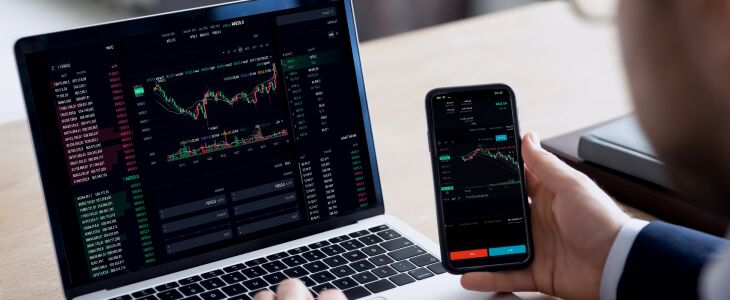
online trading continues to evolve at a breakneck pace, and staying ahead of the curve is essential for traders looking to maximize their returns. To succeed in 2025’s dynamic trading environment, it’s crucial to adapt new strategies that align with emerging trends and market conditions. This blog highlights some of the most effective online trading strategies to leverage for a competitive edge this year.
Focus on Data-Driven Investments
The rise of big data and advanced analytics has disrupted how trading decisions are made. To keep up, traders must actively utilize data-driven strategies to identify trends, patterns, and anomalies. Predictive modeling and AI-powered algorithms make it easier to anticipate market movements, resulting in better decision-making and reduced risks. Incorporating real-time data insights into your trading strategy ensures you’re not just guessing but making educated, calculated moves.
Diversify Across Multiple Assets
Diversification remains a timeless trading principle, but its importance escalates in 2025. The uncertainty of global markets—ranging from inflation trends to geopolitical disruptions—necessitates spreading your portfolio across various asset classes. Beyond the traditional diversification of stocks and bonds, consider alternative assets like commodities, cryptocurrencies, and ETFs. This well-rounded approach helps mitigate losses during market downturns.
Master Technical Analysis Trends
Technical analysis plays a critical role in modern trading, and staying updated with the latest charting techniques is a must. For 2025, focus on mastering tools that account for volatility, such as moving averages and Fibonacci retracement. Volume analysis is another trend gaining traction, as it helps traders identify the strength of a price movement. By refining your technical analysis skills, you’ll gain a deeper understanding of when to enter and exit trades.
Prioritize Risk Management
Risk management strategies are the backbone of successful trading, especially in volatile markets. Stop-loss orders, risk-reward ratios, and position sizing should all be integral components of your plan. For 2025, dynamic risk management is key. This involves continuously adapting your risk thresholds based on market conditions and your financial goals. Set clear limits to protect your capital while maintaining the flexibility to seize opportunities.
Automate and Optimize
Automation is not a luxury anymore—it’s a necessity. Whether you’re integrating algorithmic trading tools or simply automating repetitive tasks, optimization through technology saves time and reduces human errors. Focus on automating strategies for high-frequency trading while keeping room for manual oversight when it comes to significant market moves.
Charting Your Course in 2025
Navigating online trading in 2025 demands a strategic, informed, and adaptive approach. By leveraging data-driven decisions, diversifying across assets, refining technical analysis techniques, implementing strong risk management, and incorporating automation, traders can set themselves up for success. The key is not just learning, but evolving alongside the markets to ensure sustainable gains.